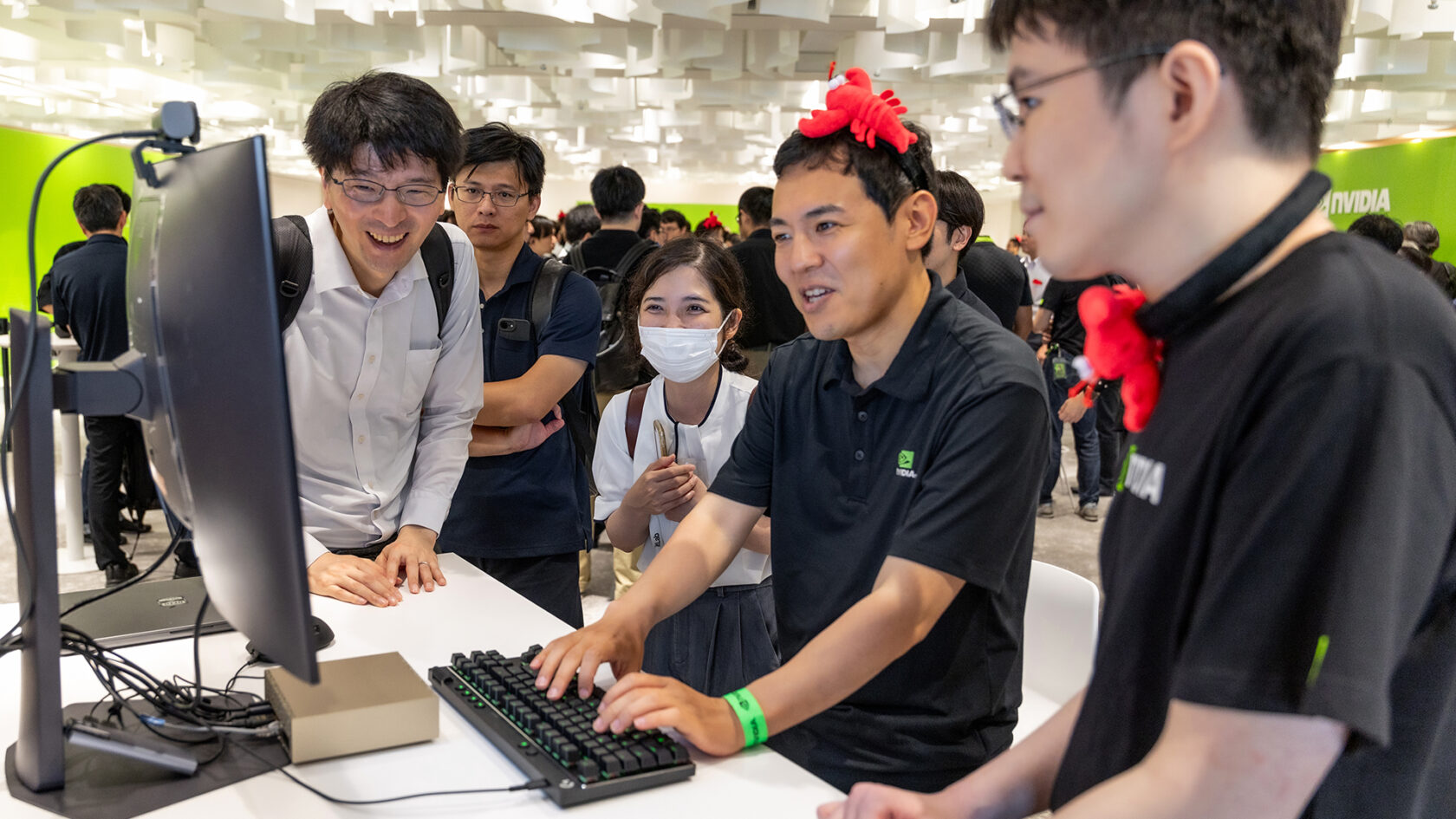
<p>NVIDIA’s <a href='https://blogs.nvidia.com/blog/japan-ecosystem-2026/'>July 15, 2026 Japan update</a> places simulation at the centre of its latest robotics message. The company says Toyota is expanding work across automotive, robotics and cities, including the use of Omniverse libraries and Isaac Sim for factory simulation, robot-motion studies and digital-twin environments.</p><p>That matters to developers because it frames physical AI as an engineering workflow rather than a single robot feature. A team can model a workcell, test movement and iterate on software before putting hardware near people or valuable equipment. The announcement also describes a wider Japanese ecosystem involving manufacturers, robotics companies, government and research organisations. It is a platform story, not evidence that one universal robot stack is ready for every site.</p><h2>What was actually announced</h2><p>NVIDIA’s post is a broad ecosystem update, but its robotics substance is specific enough to be useful. Toyota is described as using NVIDIA accelerated computing, AI software and simulation technologies to support safer vehicles, factory optimisation and urban intelligence. For robotics and manufacturing, the notable point is the stated use of Omniverse libraries with Isaac Sim to simulate robot movement and broader digital-twin environments.</p><p>Separately, NVIDIA reports that developers at its Build-a-Claw event in Tokyo used open models and NVIDIA’s platform to build robots able to pick up objects. The demonstration shows an accessible development path for physical-AI experimentation. It does not establish that the same models, sensors or control policies will transfer reliably to a production manipulator, an autonomous mobile robot or a machine working outdoors.</p><h2>Why simulation is useful, and where it stops</h2><p>Simulation is valuable when it exposes failure modes early. Developers can vary object positions, lighting, collision geometry, timing and sensor noise without risking a worker, a prototype or a production line. Digital twins can also help teams compare layouts and rehearse changes before a deployment window. Those benefits are particularly relevant for mobile platforms that must share space with people, vehicles and changing obstacles.</p><p>However, a successful simulated run is not a field result. The NVIDIA announcement does not provide an independent benchmark, a repeatable task-success rate, a deployment schedule, a complete compatibility matrix or evidence from a Toyota robot operating autonomously in a live site. Simulation can omit friction, cable flex, reflective surfaces, network loss, battery ageing, unexpected human behaviour and maintenance errors. A policy that looks stable in a virtual cell still needs controlled hardware testing and a documented fallback state.</p><h2>Compatibility is the developer’s responsibility</h2><p>The platform promise should therefore be read as an invitation to investigate interfaces, not as a guarantee of plug-and-play integration. Before committing to a workflow, a robotics team should confirm:</p><ol><li>which robot bodies, actuators, sensors and middleware are supported;</li><li>how simulated observations and actions map to the physical controller;</li><li>which compute target, operating-system version and model format are required;</li><li>how timing, logging, calibration and network interruptions are handled; and</li><li>which software licences, model weights and data-use terms apply.</li></ol><p>These checks are practical because the most expensive failure is often not a bad model. It is a mismatch between the simulator, the robot driver, the sensor frame, the real-time controller and the site’s operational software. Teams should version-pin the stack, keep a hardware-in-the-loop test environment and record every change that can affect motion or perception.</p><h2>Safety and regulation remain outside the demo</h2><p>NVIDIA’s announcement describes simulation as a way to support safer development, but it does not make a safety case for a particular robot or workplace. A real deployment still needs a task-specific risk assessment, guarded operating modes, emergency-stop behaviour, speed and force limits, human-robot separation rules, recovery procedures and clear ownership when the robot enters a degraded state. Cybersecurity and access control matter too: a model update or remote command can change physical behaviour.</p><p>Regulatory responsibility also stays with the deployer and system integrator. Machinery conformity, workplace safety, privacy, data retention and local requirements may all apply depending on the robot and site. If a future project extends the same development stack to drones or outdoor autonomous machines, aviation authorisations, airspace constraints and remote-pilot responsibilities become additional gates. None of those approvals follows automatically from a simulation framework or a public technology demonstration.</p><h2>What developers can take from the update</h2><p>The useful signal is the direction of travel: NVIDIA and Toyota are presenting simulation, digital twins and accelerated AI as shared infrastructure for physical systems. For teams building field-capable platforms, that can reduce iteration time and make test cases more systematic. The stronger interpretation is narrower: use the announcement to identify tools worth evaluating, then demand robot-specific evidence before treating a capability as deployable.</p><p>For now, this is a credible development-platform announcement and a visible demonstration of open-model experimentation. It is not a field-robot certification, a universal compatibility claim or a substitute for physical validation. Developers who keep that boundary explicit can use the stack productively without confusing a compelling demo with operational readiness.</p><section class="media-fleet-sources"><h2>Official sources</h2><ul><li><a href="https://blogs.nvidia.com/blog/japan-ecosystem-2026/">Official source: blogs.nvidia.com</a></li></ul></section><aside class="media-fleet-related"><h2>Related reading</h2><ul><li><a href="https://rentbuyrobot.com/article/nasa-astrobee-arkisys-open-space-robotics-research">Nasa Astrobee Arkisys Open Space Robotics Research</a></li><li><a href="https://rentbuyrobot.com/article/figure-03-production-scale-beyond-prototype">Figure 03 Production Scale Beyond Prototype</a></li></ul></aside>
PrototypeReport
NVIDIA–Toyota Push Simulation-First Tools for Robot Developers
NVIDIA’s Japan update links Toyota’s physical-AI work to factory simulation, open models and digital twins, while leaving field validation and safety evidence to robot teams.