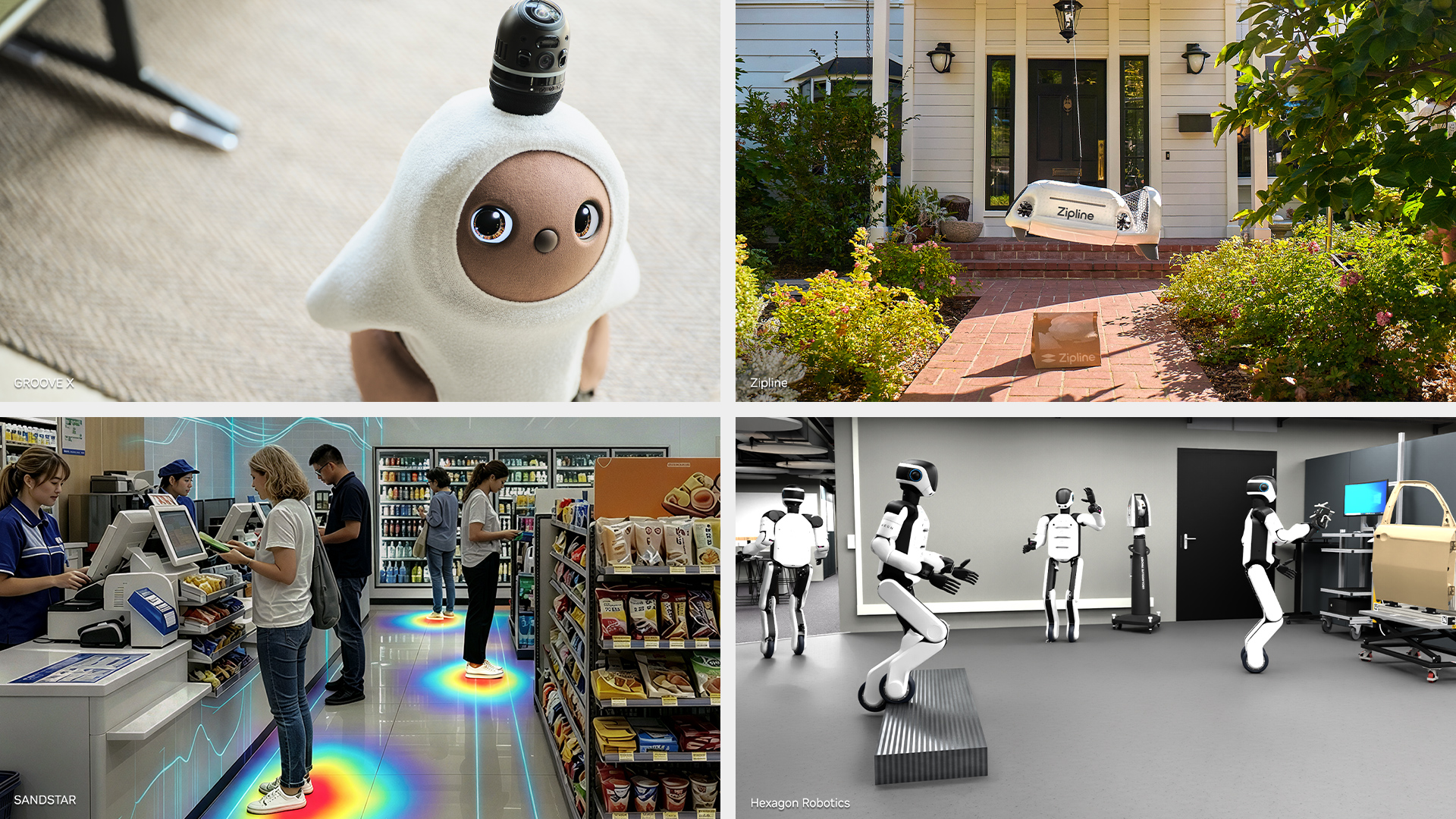
<p>NVIDIA’s <a href='https://blogs.nvidia.com/blog/jetson-agentic-ai-physical-world/'>Jetson 7.2 announcement</a> is relevant to field-robot developers for a practical reason: it moves more of the development stack onto the computer that travels with the machine. JetPack 7.2 adds Yocto Project support, CUDA 13 on Jetson Orin, and Multi-Instance GPU support with a real-time kernel on Jetson Thor. NVIDIA is pairing that base layer with agent skills for system configuration and benchmarking, plus NemoClaw for running agentic AI at the edge.</p> <p>The announcement is not a new autonomous vehicle, and it is not a certification. It is a platform update. The useful question for a drone, inspection rover or agricultural machine is therefore not whether an agent can make a convincing demo, but whether the new software can fit the vehicle’s existing compute, sensors, control path and operating approval.</p> <h2>What is actually changing</h2> <p>NVIDIA describes JetPack 7.2 as three layers. The first is the operating-system and compute foundation. Yocto support gives teams a route to a smaller, more reproducible Linux image, which matters when an outdoor robot has a constrained memory, power and update budget. CUDA 13 extends the software base on Jetson Orin. On Jetson Thor, NVIDIA says that MIG and a real-time kernel can reserve GPU resources for deterministic workloads such as perception.</p> <p>The second layer is a set of agent-deployable skills for Linux customisation, memory optimisation and model benchmarking. The third is NemoClaw, which NVIDIA says can be deployed to Jetson with a single command. That can shorten the path from a development workstation to an edge prototype, but it does not remove the integration work around a moving machine.</p> <p>The same announcement cites deployments and integrations across robotics, industrial inspection, agricultural machinery and drones. It specifically says that Zipline uses Jetson Orin NX for onboard sensor fusion and navigation in its autonomous delivery drones. That is evidence of a real deployment claim by NVIDIA; it is not a transferable performance guarantee for another airframe, radio link or mission.</p> <h2>Compatibility starts below the AI model</h2> <p>Before treating JetPack 7.2 as an upgrade, map the whole vehicle interface. Confirm the exact Jetson module and carrier board, supported boot firmware, camera and depth-sensor drivers, storage, thermal path and power draw. Then check the versions of CUDA-dependent libraries, ROS 2 nodes, flight-controller or motor-controller interfaces, time synchronisation and wireless peripherals. A model that runs on a developer kit is not automatically compatible with the production carrier board or with the robot’s safety controller.</p> <p>For a field platform, the most important compatibility test is a degraded-mode test. Disconnect the cloud, reduce bandwidth, inject a stale sensor frame and simulate a temperature or power limit. The robot should have a documented response: hold position, slow down, return, land, stop the tool or hand control back to a trained operator. Agentic reasoning should sit behind explicit motion, geofence and actuator limits rather than becoming an unbounded replacement for them.</p> <h2>Regulation and safety remain separate gates</h2> <p>Edge compute can improve latency and reduce reliance on a remote server, but it does not grant permission to fly, operate beyond visual range, work over people or enter a controlled site. The operator still has to identify the national aviation rules, airspace restrictions, remote-identification obligations and mission-specific approvals that apply to the drone. Ground robots and agricultural machines likewise need a site risk assessment, safe-speed and separation rules, emergency-stop coverage, maintenance procedures and a clear responsibility model for autonomous decisions.</p> <p>For teams moving from simulation to a live site, the safety case should name the software version, model version, sensor configuration and fallback behavior. Test perception and navigation with recorded edge cases before testing on the vehicle. Keep a rollback image and logs that connect an agent decision to the sensor inputs and command sent to the low-level controller. Human supervision must be defined in operational terms: who is watching, what they can override, how quickly they must respond and what happens when the link fails.</p> <h2>What developers should take from the announcement</h2> <p>JetPack 7.2 makes a credible developer-stack story for organisations that need custom Linux images, repeatable edge builds and local AI inference across more than one robot class. Its strongest value is workflow continuity: configure the system, benchmark memory and models, then package the same class of software for a machine that operates away from the data centre.</p> <p>The limitation is equally important. NVIDIA’s announcement reports platform capabilities and partner deployments; it does not publish an independent field trial, an airworthiness finding or a universal compatibility matrix for every robot. The burden of proof remains with the integrator. Validate the exact hardware and software bill of materials, measure latency and thermal behaviour in the real enclosure, and document the operational boundary before enabling autonomous motion.</p> <p>For a field-robot team, that makes JetPack 7.2 worth evaluating as an edge-development foundation, not as a shortcut around engineering controls. Start with a constrained inspection or mapping task, keep the safety controller independent, and promote the system only when simulation results, supervised trials and local regulatory checks agree.</p><section class="media-fleet-sources"><h2>Official sources</h2><ul><li><a href="https://blogs.nvidia.com/blog/jetson-agentic-ai-physical-world/">Official source: blogs.nvidia.com</a></li></ul></section><aside class="media-fleet-related"><h2>Related reading</h2><ul><li><a href="https://rentbuyrobot.com/article/nasa-stride-mars-robot-mobility-research">Nasa Stride Mars Robot Mobility Research</a></li><li><a href="https://rentbuyrobot.com/article/agility-humanoid-policy-deployment-test">Agility Humanoid Policy Deployment Test</a></li></ul></aside>
PrototypeReport
NVIDIA JetPack 7.2 brings agentic AI to field robots—what developers must verify
NVIDIA’s JetPack 7.2 and NemoClaw update targets robotics, inspection, agricultural machines and drones. The real deployment question is compatibility, safety and regulatory readiness at the edge.