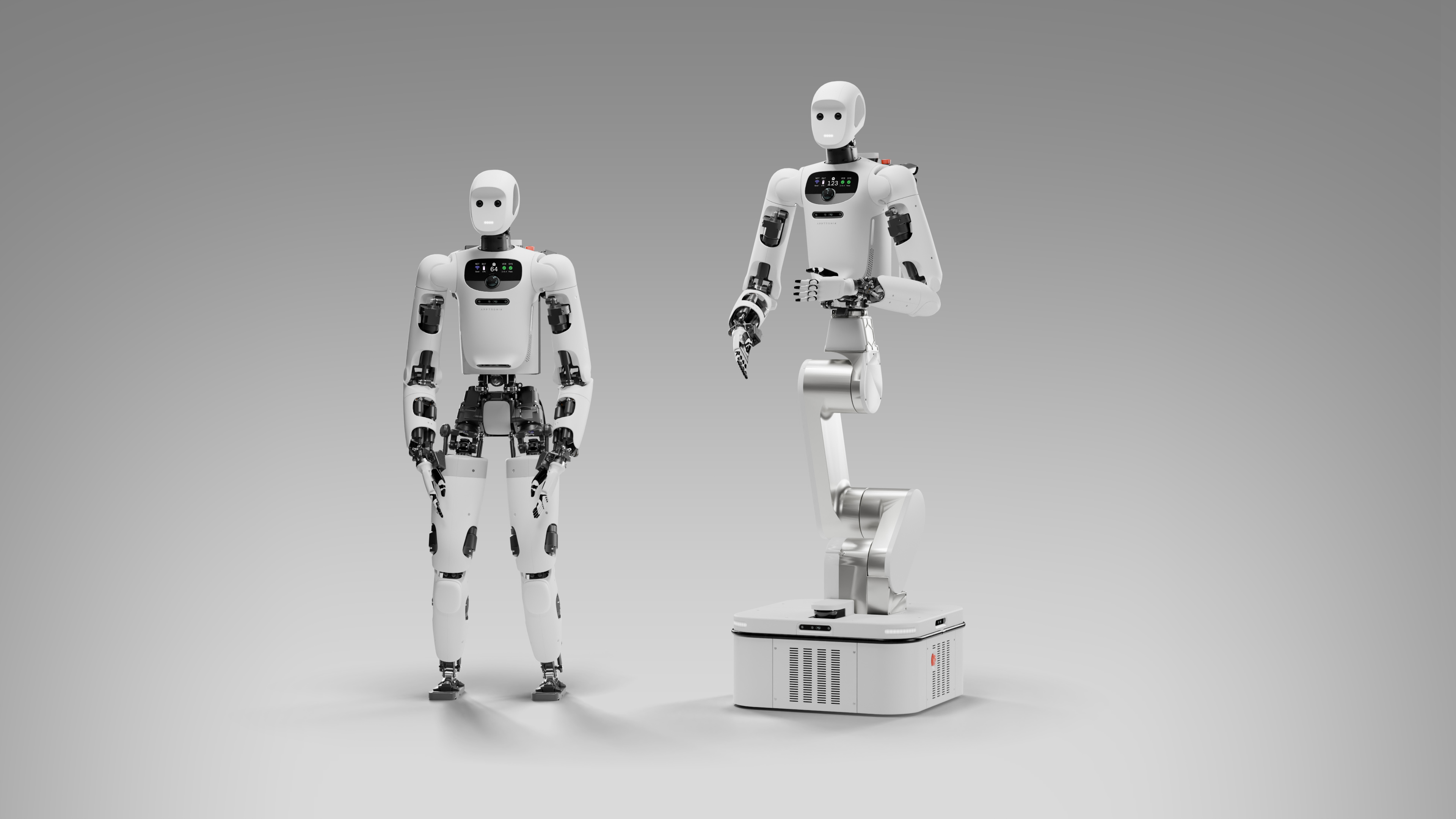
<p>Apptronik’s June 30 announcement about Robot Park offers a useful checkpoint in humanoid robotics: Apollo 2 is no longer presented only as a laboratory machine or a trade-show demonstration. The company says operational fleets are collecting data at its newly expanded Austin facility, at partner locations and at customer sites. That is evidence of real deployment activity. It is not, by itself, evidence that Apollo 2 is ready to replace a production cell or run unattended for an entire shift.</p><p>The distinction matters because the announcement describes Robot Park primarily as a data-collection and training operation. Apptronik says the nearly 90,000-square-foot Austin facility is part of a growing network where Apollo 2 robots perform customer-driven tasks in logistics, manufacturing, retail and related environments. The company also identifies Mercedes-Benz, GXO and Google DeepMind among the sites or partners involved in comparable workflows. These are concrete operating locations, but the release does not publish robot counts, task cycle times, intervention rates or acceptance criteria for any individual deployment.</p><h2>What is operating today</h2><p>According to <a href='https://apptronik.com/news-collection/welcome-to-robot-park-where-apptroniks-apollo-goes-to-work'>Apptronik’s announcement</a>, Apollo 2 is active in both bipedal and wheeled-base configurations. The same core humanoid platform can therefore be used to gather data in spaces designed for people while also being adapted to more conventional mobile-robot layouts. Apptronik describes Apollo 2 as the workhorse behind Robot Park for more than a year, combining teleoperation with autonomous execution to generate training data.</p><p>That combination is important. Teleoperation can expose a robot to difficult situations and produce demonstrations that would be expensive to script manually. Autonomous runs can then test whether learned behavior transfers beyond the exact conditions of those demonstrations. However, Apptronik does not disclose the proportion of teleoperated versus autonomous work, the level of supervision during autonomous runs, or how often a human must recover the robot. The release therefore supports the claim that real-world learning operations are underway, not the stronger claim that the system is broadly autonomous.</p><h2>Why the mobile configuration matters</h2><p>The announcement says the wheeled-base configuration is designed to conform with existing safety standards for industrial mobile robots. That wording should be read carefully. It describes a design intention, not a named certification, a jurisdiction-specific compliance result or a completed site risk assessment. In practical deployments, the relevant questions remain local: how the robot shares aisles with people, how it behaves around forklifts and other vehicles, what happens after a navigation fault, and who is responsible for recovery.</p><p>The bipedal configuration has a different purpose. Apptronik says it provides greater adaptability in complex environments and is being used to refine the safety and reliability of walking platforms. That makes the biped valuable as a research and development instrument, but it also highlights a limit: the announcement does not establish that walking and wheeled Apollo 2 units have equivalent reliability, payload performance or autonomy. The configurations should be treated as related platforms with different operational evidence.</p><h2>What the announcement does not prove</h2><p>Robot Park is a meaningful step beyond a staged demo because the robots are being used repeatedly to collect data across real facilities and customer-driven workflows. Yet the public evidence stops short of a production benchmark. There are no published figures for uptime, throughput, mean time between failures, battery endurance, successful task completion or safety incidents. The release also does not identify a specific customer process that has been accepted for unsupervised production use.</p><p>That limitation is especially relevant to Apptronik’s discussion of future systems. The company says data generated by Apollo 2 will support the development of its next-generation Apollo 3 commercial fleet in partnership with Google DeepMind. This is a forward-looking development plan, not a current product result. The presence of Apollo 2 in a customer or partner environment should therefore be separated from any claim about the availability, capability or deployment schedule of Apollo 3.</p><h2>The useful conclusion for robotics teams</h2><p>Apptronik’s Robot Park announcement is best understood as evidence of an intermediate stage between prototype research and scaled industrial deployment. The company has described active fleets, a dedicated training facility, customer and partner locations, two mobility configurations and a learning loop that includes both human guidance and autonomous execution. Those are substantive signs of engineering progress.</p><p>They are also a reminder of what a responsible evaluation still needs. Before adopting a humanoid platform, a site would need task-specific trials, documented safeguards, recovery procedures, measured intervention rates and evidence gathered under its own traffic, lighting, payload and staffing conditions. Until those figures are published, Apollo 2’s Robot Park activity should be reported as real operational learning and deployment work—not as proof that humanoids have already become general-purpose production workers.</p><section class="media-fleet-sources"><h2>Official sources</h2><ul><li><a href="https://apptronik.com/news-collection/welcome-to-robot-park-where-apptroniks-apollo-goes-to-work">Official source: apptronik.com</a></li><li><a href="https://apptronik.com/apollo/apollo-2">Official source: apptronik.com</a></li></ul></section><aside class="media-fleet-related"><h2>Related reading</h2><ul><li><a href="https://rentbuyrobot.com/article/kawasaki-dexterity-eight-axis-industrial-arm-warehouse-deployment">Kawasaki Dexterity Eight Axis Industrial Arm Warehouse Deployment</a></li><li><a href="https://rentbuyrobot.com/article/comau-omron-partnership-deployment-safety-capability-limits">Comau Omron Partnership Deployment Safety Capability Limits</a></li></ul></aside>
PrototypeReport
Apollo 2 at Robot Park: Real Work, Not Production Proof
Apptronik says Apollo 2 fleets are collecting data at Robot Park and partner sites. Here is what the announcement establishes—and what it still leaves unmeasured.